
Emergency care
Syringe and infusion pumps: how to prepare procurement for a department
Author: Oleksii Pavlov, CEO of MedBoom
Compare syringe and infusion pumps after agreeing the clinical task, rather than by display size or starting price. For the purchaser, the main question is: which fluid delivery system must the equipment support, and how will it work in the specific department? The doctor, nursing team and engineering service develop the answer. This article concerns procurement, not the choice of treatment, infusion rate or device settings.
Clarify the system type first
A syringe pump is one type of infusion pump. It holds fluid in a syringe, and movement of the plunger controls delivery. Peristaltic systems move fluid through flexible tubing. The FDA's article on infusion pumps describes these principles. Therefore, the words “syringe” and “infusion” in a commercial name should not be treated as completely independent medical categories.
In the technical specification, state the exact type of consumable delivery system, installation conditions and required modes agreed by the clinical team. Do not determine intended use from appearance alone. Also, do not assume that a device intended for one administration route is suitable for another: the specific intended use must be explicitly confirmed by the documentation.
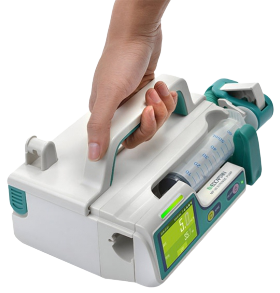
MedBoom offers the MEDCAPTAIN MP-30 syringe pump and the MEDCAPTAIN MP-60 infusion pump. These are starting points for requesting documentation and package details, not a claim of interchangeability. Specifications from another version or generation should not automatically be applied to these items.
Include consumables in the comparison
Ask for a list of manufacturer-approved syringes or infusion sets with exact names and codes. A syringe's nominal volume or a similar connector is not sufficient proof of compatibility. For every proposed set, it should be clear exactly where its use is confirmed in the instructions.
Establish which materials the facility already purchases, who will verify their suitability for the new device and how subsequent batches will be ordered. The cost of the first set does not reflect the total expense. Compare the department's needs, delivery terms and reserve stock, but do not replace an agreed material with a cheaper alternative without proper confirmation of compatibility.
Demonstrate the workflow without a patient
Arrange a demonstration on a training setup with the future users present. Ask to see screen readability, navigation, documented warnings and access to the instructions. Assess whether staff distinguish the mode names and messages in the specific software version. A training demonstration must not become an experiment in clinical use.
Prepare your own acceptance protocol. It can record model identification, verification of the supplied accessories, availability of documentation, training and handover of the equipment to the responsible person. A competent engineering service agrees the parameters and method of technical checks in accordance with the documentation; the purchaser should not determine these from an advertising table.
Discuss backup arrangements and servicing in advance
The FDA recommends that healthcare facilities have a plan for pump failure and train staff in safe use. A damaged or malfunctioning device must be removed from service under the facility's procedure, rather than having its alert concealed. Source: FDA recommendations for clinicians. The medical team determines the specific actions for the patient.
Before purchase, establish who handles service requests, where maintenance is performed and how the facility will organize backup equipment during repairs. If the supplier offers a loan device, ask for written clarification of the terms: a verbal mention alone does not guarantee its availability when needed.
For the battery, ask about inspection, maintenance and replacement conditions. Assess advertised battery runtime together with the test conditions; it does not replace the department's backup power plan. Do not infer compatibility of an external power source solely from the shape of its plug.
Compare the complete cost estimate
Bring the device, mounts, power cables, approved consumables, documentation, training and servicing together in one offer. Identify additional options and what the facility will provide itself separately. An inquiry to MedBoom with this list will help compare packages while leaving the clinical choice and authorization for use to the responsible specialists.